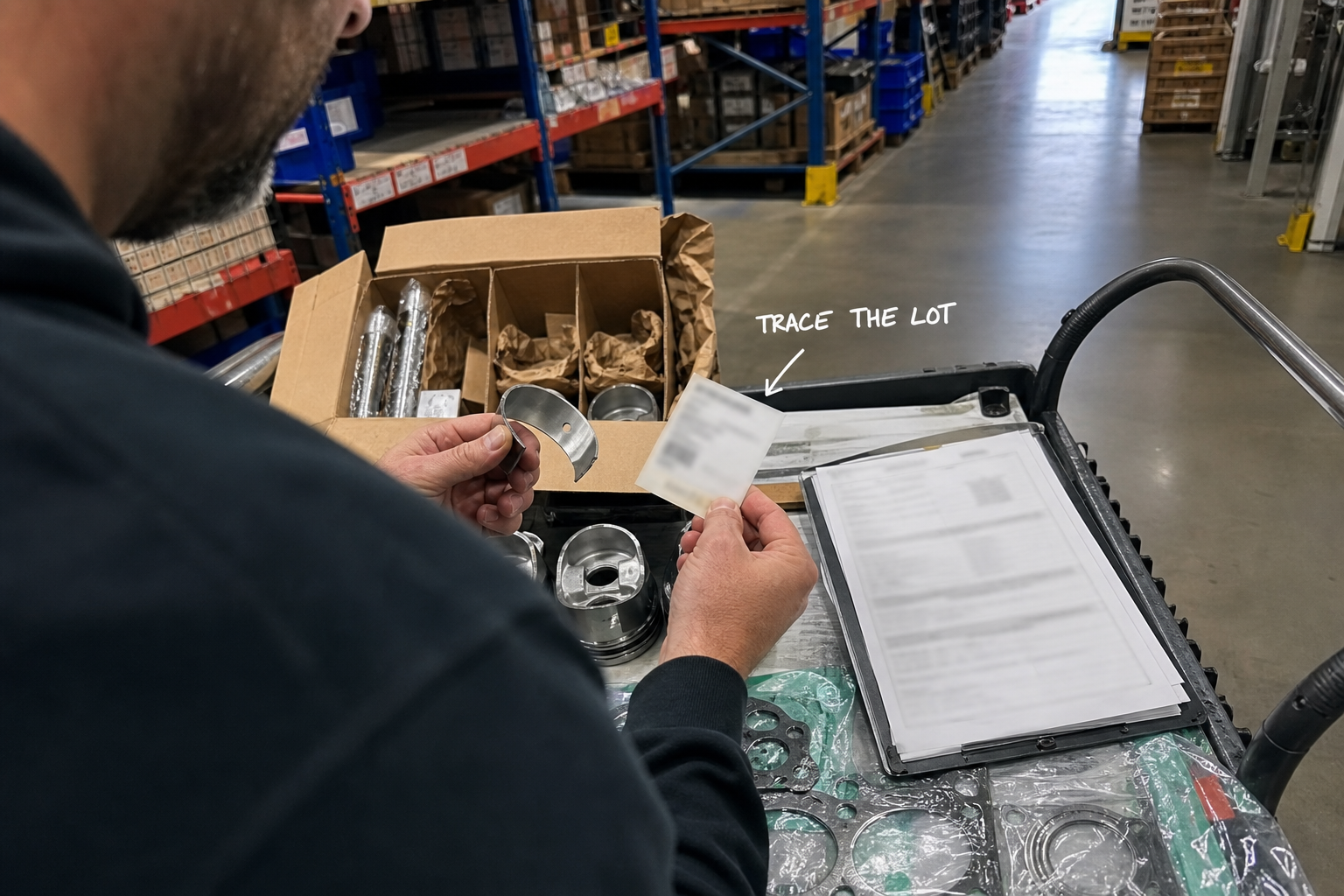
Lot traceability connects the supplied component to its packaging and receiving records.
When ordering Enginetech rebuild kits or engine components, many buyers assume the name on the box identifies the factory that machined every gasket, bearing, and piston inside. That assumption conflates three distinct roles: the brand owner who catalogs and sells the kit, the assembler who sources and bundles components, and the individual manufacturers who produce pistons, rings, bearings, or seals under contract. Enginetech operates primarily as a brand and kit integrator, curating components from a supplier network rather than manufacturing each part in a single facility.
This distinction matters when evaluating quality consistency, tracing component origin for warranty claims, or matching replacement parts years later. A rebuild kit stamped "Enginetech" may contain bearings from one supplier, rings from another, and gaskets from a third, each meeting Enginetech’s specification but carrying different manufacturing tolerances and material sources. Understanding this multi-tier model helps buyers ask the right verification questions before committing to a kit, especially for critical applications where part-to-part consistency determines engine longevity.
Key Takeaways
|
Point |
Detail |
|
**Brand vs. manufacturer** |
Enginetech is the catalog brand; individual components often come from contract suppliers in the OE and aftermarket supply base |
|
**Kit assembly model** |
Enginetech sources pistons, bearings, gaskets, and other parts from specialized manufacturers, then bundles them into application-specific kits |
|
**Quality variance** |
Component quality depends on the specific supplier for each part type; not all parts in a kit share the same manufacturing origin |
|
**Verification workflow** |
Request component manufacturer names, spec sheets, and country-of-origin documentation before purchase for critical builds |
Enginetech’s Role in the Engine Parts Supply Chain
Enginetech (https://enginetech.com/about-us/) positions itself as a supplier of engine rebuild kits, gaskets, valvetrain components, and hard parts for automotive, light truck, and some industrial applications. The company does not describe itself as a vertically integrated manufacturer that casts blocks, forges pistons, or grinds camshafts in-house. Instead, it functions as a parts integrator: selecting components from established suppliers, validating fitment for specific engine families, and packaging them into master rebuild kits or individual SKUs.
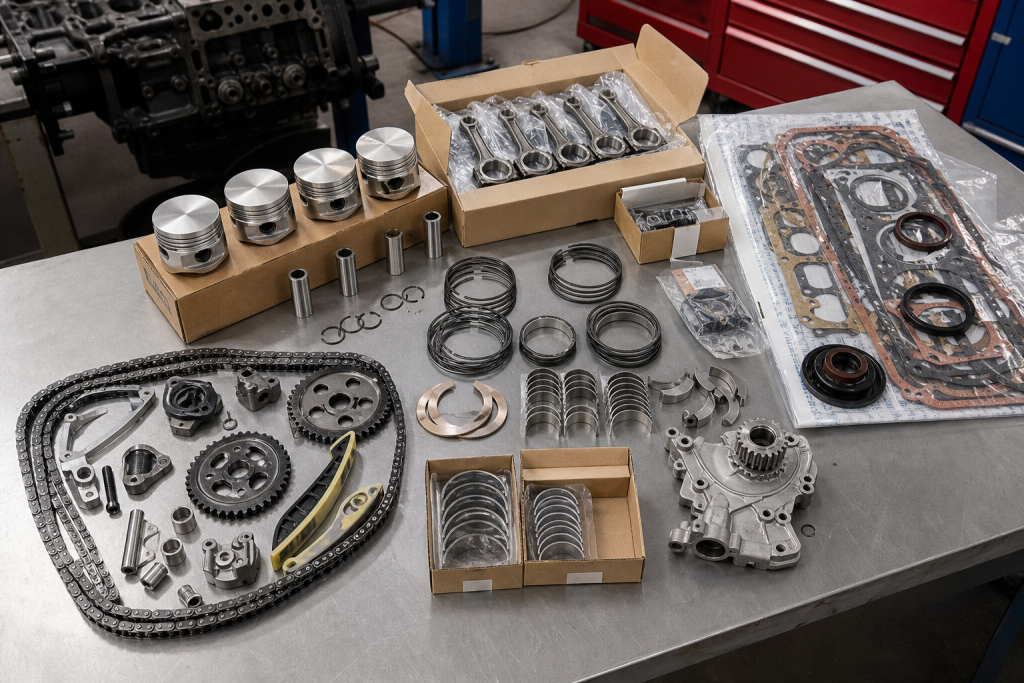
This model mirrors how many "brand" distributors operate in the automotive aftermarket. A single Enginetech master kit for a small-block Chevy may include:
- **Pistons and rings** from a forging and ring manufacturer
- **Main and rod bearings** from a bearing specialist
- **Gasket set** from a gasket supplier
- **Timing components** from a chain or belt manufacturer
- **Oil pump** from a pump supplier
Each component arrives at Enginetech with its own part number, material certification, and manufacturing origin. Enginetech’s value-add lies in application engineering—ensuring bore sizes, ring end gaps, bearing clearances, and gasket materials match the target engine—and in consolidating dozens of individual parts into a single orderable kit. The brand name provides a unified catalog reference, but the underlying components trace back to multiple factories.
How Component Sourcing Affects Consistency and Traceability
Because Enginetech kits aggregate parts from different suppliers, quality and specification consistency depend on the stability of those supplier relationships. If Enginetech switches bearing suppliers between production runs, two "identical" master kits ordered six months apart may contain bearings with different material formulations, crush specifications, or fatigue ratings, even though both meet Enginetech’s published spec.
This supplier variability creates traceability challenges:
- **Warranty claims**: If a bearing fails prematurely, identifying the actual manufacturer requires Enginetech to provide supplier documentation for that production lot.
- **Replacement matching**: Replacing a single failed piston years later may require knowing which piston supplier Enginetech used for that kit run, since dimensional tolerances vary by manufacturer.
- **Quality audits**: Shops performing incoming inspection cannot assume all Enginetech kits share identical material properties or machining quality across part types.
The multi-supplier model is standard industry practice and not inherently problematic, but it shifts due diligence responsibility to the buyer. Relying on the Enginetech brand name alone does not guarantee uniform component origin or consistent quality metrics across the entire kit.
What Buyers Should Verify Before Ordering
For production rebuilds, commercial fleets, or performance applications where part failure carries high cost, buyers should request the following information from Enginetech or their distributor before committing to a kit:
Component Manufacturer Identity
Ask for the name and location of the actual manufacturer for each major component type:
- Piston and ring supplier
- Bearing manufacturer
- Gasket set producer
- Camshaft and lifter source (if included)
Enginetech may provide this on request, or the distributor may need to escalate the question. If the supplier name is withheld as proprietary, that signals limited transparency and should factor into the purchasing decision.
Specification Sheets and Material Certifications
Request datasheets that document:
- Material composition (e.g., aluminum alloy grade for pistons, steel type for rings)
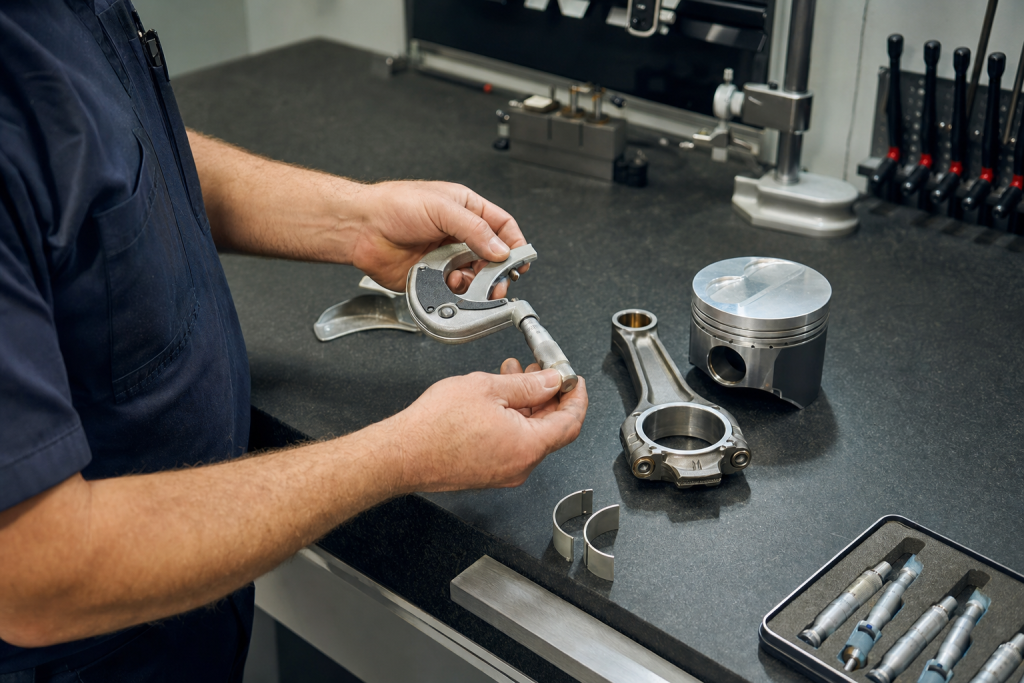
- Dimensional tolerances (bore diameter, ring end gap, bearing crush)
- Heat treatment or coating processes
- Quality certifications (ISO, TS, or equivalent)
Compare these specs against OE service manual tolerances or aftermarket performance requirements for the target engine. Gaps or missing data indicate incomplete documentation.
Country of Origin and Import Documentation
For buyers subject to sourcing restrictions, government contracts, or quality-audit requirements, confirm:
- Country of manufacture for each component type
- Import customs codes and tariff classifications
- Compliance with applicable safety or environmental standards
Enginetech’s catalog system (https://www.enginetechcatalog.com/) provides part numbers and application data but does not consistently surface manufacturing origin. Buyers needing this detail must contact Enginetech or their distributor directly.
Lot or Serial Traceability
Determine whether Enginetech assigns lot codes or date codes to kits that allow tracing components back to specific supplier production runs. This becomes critical if a defect pattern emerges and you need to identify which kits contain affected parts. Not all Enginetech kits carry lot-level traceability, so establish this requirement up front for high-volume or critical applications.
How Enginetech Kits Compare to Single-Source OE or Performance Suppliers
Enginetech’s multi-supplier model contrasts with two other sourcing approaches common in engine rebuilding:
OE remanufacturers (e.g., GM Genuine Parts engines) typically source components from the same tier-one suppliers that served the original assembly line, maintaining tighter supplier consistency across production runs. This reduces part-to-part variance but comes at higher cost and longer lead times.
Performance specialists (e.g., dedicated piston forgers, bearing manufacturers) produce components in-house or through tightly controlled sub-contractors, offering better traceability and custom specification options. These suppliers serve a narrower application range and price higher than integrator brands like Enginetech.
Enginetech occupies the middle ground: broader application coverage and faster availability than OE channels, with lower cost than performance specialists, but less supplier transparency and higher component variance than either extreme. The trade-off suits shops running volume rebuilds on common engine families where cost and availability outweigh the need for single-source traceability.
When the Multi-Supplier Model Creates Risk
Certain rebuild scenarios expose the limitations of kit integrator sourcing:
- **High-mileage commercial engines**: Fleet operators tracking failure patterns across hundreds of rebuilds need consistent component quality to validate rebuild procedures. Supplier variance within the same brand complicates root-cause analysis.
- **Performance builds with tight tolerances**: Piston-to-wall clearance, ring end gap, and bearing crush must hit narrow targets. If Enginetech’s piston supplier changes mid-year, previously validated clearances may no longer hold.
- **Warranty-backed remanufacturing**: Shops offering long warranty periods need stable supplier relationships to ensure replacement parts match original kit specs years later.
In these cases, buyers should either negotiate supplier-consistency guarantees with Enginetech (specifying that all kits in an order use the same component sources) or source major components directly from single manufacturers and use Enginetech only for lower-risk gaskets and small parts.
Verifying Enginetech Component Sources in Practice
Because Enginetech does not publish a supplier directory, verification requires direct inquiry. Follow this workflow:
- **Identify critical components** in the target kit (typically pistons, bearings, camshaft).
- **Contact Enginetech or your distributor** with the kit part number and request component manufacturer names and datasheets.
- **Cross-reference supplier names** against known manufacturers in the aftermarket (e.g., Federal-Mogul for bearings, Mahle for pistons) to assess supplier reputation.
- **Request samples** for destructive testing or dimensional inspection if the application justifies the cost.
- **Document supplier information** with the kit serial or lot number for future reference.
If Enginetech or the distributor cannot or will not provide supplier details, that limits your ability to audit quality or trace defects. For non-critical applications, the convenience of bundled kits may outweigh the transparency gap. For critical builds, lack of supplier disclosure should prompt consideration of alternative sources.
FAQ
Does Enginetech manufacture its own pistons and bearings?
Enginetech does not publicly claim to operate its own forging, casting, or bearing manufacturing facilities. The company sources these components from suppliers and bundles them under the Enginetech brand. Specific supplier names vary by component type and may change over time.
Are all parts in an Enginetech kit made in the same country?
No. Enginetech kits typically contain components from multiple manufacturers, each with its own production location. Pistons, bearings, gaskets, and other parts may come from different countries. Buyers needing origin verification should request documentation for each component type.
Can I get replacement parts that match an Enginetech kit I bought two years ago?
Matching depends on whether Enginetech still uses the same suppliers for that component. If the supplier changed, dimensional tolerances or material specs may differ. Request supplier and lot information when you purchase the original kit, and store it for future reference.
How does Enginetech quality compare to OE or performance brands?
Quality varies by component and supplier. Some Enginetech parts may come from the same suppliers that serve OE or premium brands, while others may use lower-cost alternatives. Without supplier transparency, you cannot assume quality equivalence. Request spec sheets and compare documented tolerances against your application requirements.
What should I do if an Enginetech part fails under warranty?
Document the failure with photos, measurements, and operating conditions. Contact Enginetech or your distributor with the kit part number and any lot or serial codes. Request the component manufacturer’s name and failure analysis support. If the supplier cannot be identified, warranty resolution may be limited to replacement rather than root-cause correction.
Conclusion
Enginetech operates as a parts brand and kit integrator, not a vertically integrated manufacturer. The components inside an Enginetech rebuild kit come from multiple suppliers, each contributing specialized parts to the final assembly. This sourcing model delivers broad application coverage and competitive pricing but introduces supplier variance and traceability challenges that matter most in critical, high-volume, or performance rebuild applications.
Buyers who treat the Enginetech name as a shorthand for consistent single-source manufacturing risk mismatched expectations and limited recourse when quality issues arise. Effective due diligence requires identifying the actual component manufacturers, verifying specifications against application requirements, and documenting supplier information for future traceability. For shops where cost and availability outweigh the need for supplier transparency, Enginetech kits serve as a convenient bundling solution. For applications demanding tighter quality control or long-term consistency, direct sourcing from known manufacturers or negotiating supplier-consistency guarantees with Enginetech becomes the more defensible path.