Fitment confidence starts with part-number verification and real dimensional checks.
A shop receives a pallet of Enginetech rebuild components for three different engines—a small-block Chevy, a Ford modular V8, and a four-cylinder import. The bearings measure clean, the gasket set includes all listed pieces, but the piston-to-bore clearance on one application sits at the wide end of spec. The parts work, but the outcome depends on which component you’re installing, how closely the catalog matches your block, and whether you inspect dimensions before assembly.
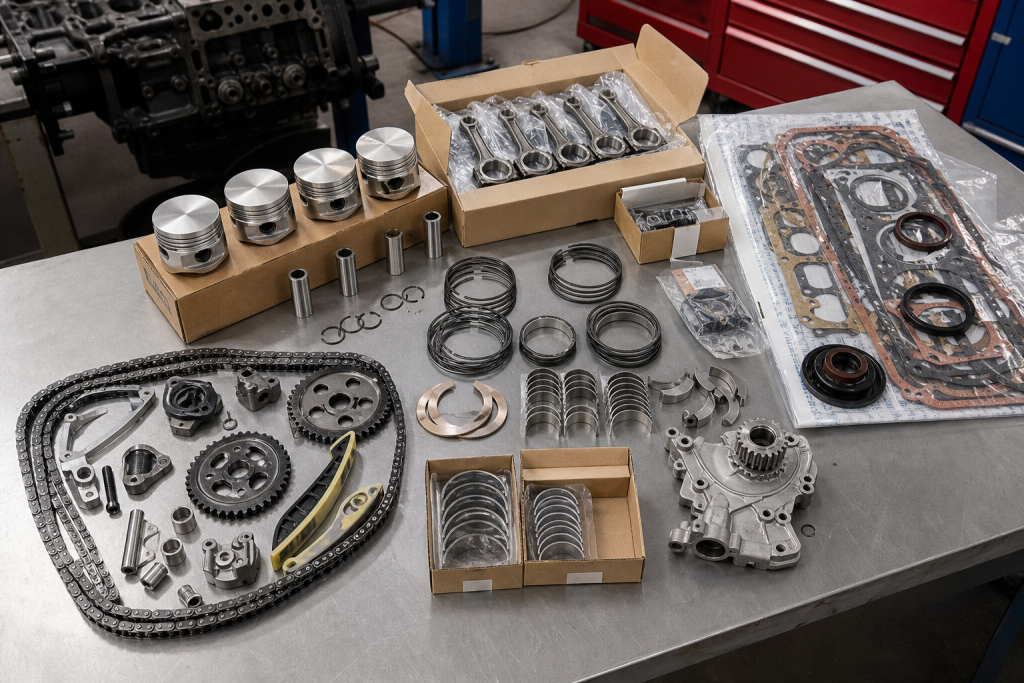
Enginetech supplies engine rebuild kits, individual bearings, gasket sets, pistons, and valvetrain parts across domestic and import applications. Quality is not uniform across the line—bearing sets typically meet OE tolerance bands, gasket materials vary by engine family, and piston forgings are sourced for value rather than performance. If you’re building to stock specs with careful fitment checks, Enginetech parts deliver predictable results. If you skip measurement or assume every kit fits perfectly out of the box, you’ll encounter gaps, mismatched compression heights, or gaskets that don’t seal on modified decks.
Key Takeaways
- Enginetech parts are value-oriented rebuild components, not performance or racing-grade hardware
- Bearing sets and gasket kits generally meet OE specifications when matched correctly to engine code and year
- Piston kits require measurement—compression height, ring gap, and skirt clearance can vary within published tolerance
- Catalog fitment accuracy improves when you cross-reference engine family, casting number, and year range rather than relying on vehicle model alone
- Warranty coverage exists but requires documentation of measurements and installation procedures at time of failure
- Red flags include missing gasket pieces, bearing tab damage in transit, and piston skirts that show machining chatter under magnification
Product Line Variability: Not All Enginetech Parts Are Equal
Enginetech’s catalog spans multiple component categories, and quality consistency should be checked by type. Bearing sets, gasket sets, pistons, timing parts, and valve-train components do not carry the same inspection risk. The right approach is to compare each part against the engine service specification and the catalog listing rather than assume every box has the same tolerance profile.
Gasket sets show more variability. Head gasket material and thickness depend on engine family. Late-model multi-layer steel gaskets for overhead-cam engines perform closer to OE than composite gaskets for older pushrod V8s, which may require sealant on water passages even when the kit doesn’t specify it. Valve cover gaskets and oil pan gaskets are usually molded rubber or cork-rubber composite; these seal adequately on unmodified surfaces but leak on decks that have been milled or warped.
Piston kits are where Enginetech’s value positioning becomes visible. Pistons are forged or hypereutectic cast depending on application, and compression height can vary by 0.010 inch within the same part number batch. Ring sets are included, but end gaps require filing on some applications to meet spec. Skirt-to-bore clearance may sit at the loose end of OE tolerance, which is acceptable for stock rebuilds but not ideal for high-mileage or high-load use.
Valvetrain components—lifters, pushrods, rockers—are sourced rather than manufactured in-house. Hydraulic lifters for domestic V8s are adequate for stock cam profiles but may pump up inconsistently with aggressive ramp rates. Pushrods are hardened and dimensionally accurate, but you should verify length if you’ve milled heads or decks.
|
Component Type |
Tolerance Consistency |
Fitment Risk |
Inspection Priority |
|
Main/rod bearings |
High |
Low |
Oil clearance, crush |
|
Gasket sets |
Moderate |
Moderate |
Material type, surface condition |
|
Piston kits |
Moderate |
Moderate to High |
Compression height, ring gap, skirt clearance |
|
Valvetrain |
Moderate |
Low to Moderate |
Lifter preload, pushrod length |
Catalog Fitment and Application Matching
Enginetech’s online catalog (https://www.enginetechcatalog.com/) lists parts by engine family, displacement, and year range. Accuracy improves when you match by engine code rather than vehicle model. A listing for "Chevy 350" may cover multiple block castings with different main journal diameters or rear seal configurations. Cross-reference your block casting number and production year to narrow the match.
Gasket sets are particularly sensitive to mid-year changes. A head gasket listed for "1996–2000 Ford 4.6L" may not fit all production variants if Ford changed head bolt patterns or combustion chamber volume during that span. Check the kit contents against your engine’s valve cover bolt count, intake manifold port shape, and exhaust manifold stud locations before ordering.
Piston kits require additional verification. Enginetech lists compression height, dome volume, and ring specs, but you must confirm that the pin height matches your rod length and that the dome or dish volume produces your target compression ratio. If your block has been bored 0.030 over, verify that the piston skirt-to-bore clearance remains within 0.001–0.003 inch after accounting for thermal expansion.
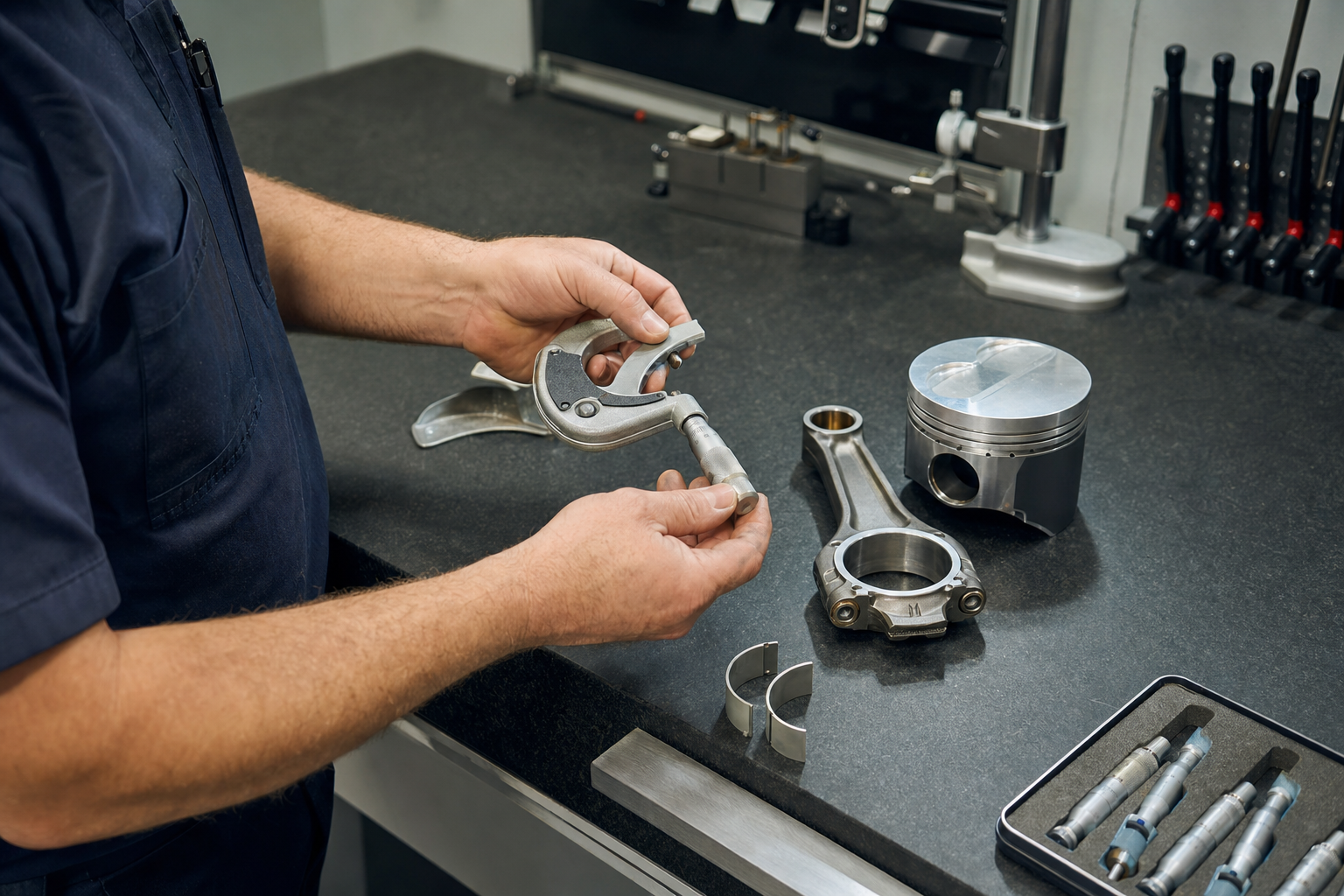
Bearing sets are the easiest to match. Enginetech supplies standard, 0.001-inch, 0.010-inch, 0.020-inch, and 0.030-inch undersize bearings for most applications. Measure your crank journals with a micrometer, then select the bearing size that yields 0.0015–0.0025 inch oil clearance for mains and 0.0010–0.0020 inch for rods. Do not assume that "standard" bearings fit a standard crank—always measure.
Stock Rebuilds: Where Enginetech Parts Fit Best
Enginetech engine kits (https://enginetech.com/engine-kits/) are designed for stock rebuilds—engines returned to OE specifications with no performance modifications. If you’re rebuilding a worn engine to factory compression ratio, cam timing, and bearing clearances, Enginetech kits provide all necessary gaskets, bearings, and seals in one package at a competitive price.
These kits work well for:
- Fleet vehicles returning to service with stock power output
- Passenger cars with high mileage but no internal damage beyond normal wear
- Engines being refreshed for resale or warranty compliance
- Rebuilds where labor cost exceeds parts cost, making complete kits more efficient than individual component ordering
Enginetech kits do not suit:
- Performance builds requiring tighter piston-to-wall clearance or upgraded ring metallurgy
- Turbocharged or supercharged applications where bearing load exceeds OE design limits
- Engines with modified decks, bored cylinders beyond 0.040 inch, or stroker cranks
- Racing or sustained high-RPM use where lifter pump-up or ring flutter becomes a failure mode
If your rebuild includes head milling, aftermarket rods, or a non-stock camshaft, you’ll need to verify each Enginetech component individually rather than trusting the kit to fit. The gasket set may lack the correct head gasket thickness for your revised compression ratio, and the piston compression height may not match your new rod length.
Inspection and Warranty: What to Check at Install
Enginetech parts require the same pre-installation inspection as any rebuild component. Do not assume that parts straight from the box meet your engine’s clearances without measurement.
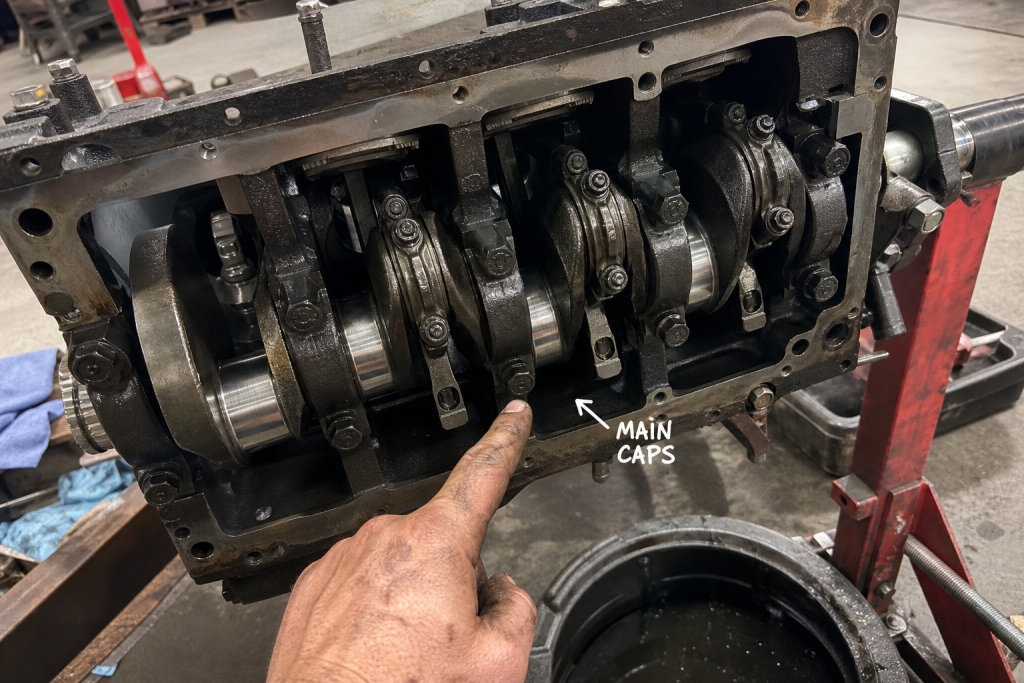
Bearings: Measure oil clearance with Plastigage or a dial bore gauge and outside micrometer. Check for tab damage, surface scratches, or crushed edges from packaging. Verify that locating tabs fit snugly in cap notches without binding.
Pistons: Measure compression height from pin centerline to deck with a height gauge. Check ring end gap in the bore at three depths to confirm even cylinder wear. Measure skirt diameter at the specified point (usually 90 degrees from the pin, at the skirt’s widest point) and subtract from bore diameter to confirm clearance. Inspect skirt finish under magnification for chatter marks or scuffing.
Gaskets: Lay head gaskets on the block and head to confirm bolt hole alignment and combustion chamber positioning. Check that coolant and oil passages align with no blockage. Verify thickness against your calculated compression ratio. For multi-layer steel gaskets, inspect for edge delamination or coating damage.
Valvetrain: Measure lifter outside diameter and bore diameter to confirm 0.0005–0.0015 inch clearance. Check pushrod straightness by rolling on a flat surface. Set lifter preload according to the cam card, not a generic spec.
Enginetech provides warranty coverage for defective parts, but claims require documentation. Photograph any dimensional discrepancy, retain packaging with lot numbers, and record measurements in your build log. A warranty claim for a spun bearing will be denied if you cannot provide oil clearance measurements from assembly. A claim for a blown head gasket will be denied if you cannot show that the gasket thickness matched your compression ratio and that surfaces were flat within 0.003 inch.
Red Flags and When to Return Parts
Return Enginetech parts immediately if you observe:
- Bearings with tab damage, back-side scratches, or inconsistent overlay thickness visible as color variation
- Pistons with skirt chatter (fine horizontal lines visible under 10x magnification), indicating poor finish quality
- Ring sets with end gaps that cannot be filed to spec without removing more than 0.010 inch of material
- Gaskets missing from the set compared to the listed contents on the box label
- Head gaskets with crushed or bent edges, or multi-layer steel gaskets with visible delamination
Do not install parts that fall outside the following limits, even if they are within Enginetech’s published tolerance range:
- Bearing oil clearance exceeding 0.0030 inch on mains or 0.0025 inch on rods
- Piston skirt clearance exceeding 0.004 inch on any cylinder
- Compression height varying more than 0.005 inch between pistons in the same set
- Ring end gap exceeding 0.020 inch on compression rings or 0.030 inch on oil rings in an unworn bore
These limits represent the edge of acceptable for a stock rebuild. Parts at these extremes will function initially but may fail early under load or show accelerated wear.
FAQ
Does Enginetech manufacture its own parts or rebrand from other suppliers?
Enginetech (https://enginetech.com/about-us/) describes itself as a source for engine rebuilders with a broad product line and distribution network. For a specific component, verify the part number, catalog listing, packaging, and any available supplier documentation instead of assuming the same manufacturing source across bearings, pistons, gaskets, and timing parts.
Can I use Enginetech pistons in a performance rebuild?
Only if your performance target is modest and you measure carefully. Enginetech pistons are designed for stock compression ratios and OE power levels. If you’re adding 10–15% more power through head work and a mild cam, and you verify that skirt clearance, ring gap, and compression height are at the tight end of tolerance, Enginetech pistons will survive. For forced induction, nitrous, or sustained high-RPM use, choose pistons explicitly rated for those conditions.
How does Enginetech compare to Sealed Power or Federal-Mogul brands?
Enginetech competes in the same value segment as Sealed Power and sits slightly below Federal-Mogul’s premium lines in price and tolerance consistency. Sealed Power bearings and Enginetech bearings often perform identically because they may come from the same overseas foundry. Federal-Mogul’s premium gasket sets (such as Fel-Pro PermaTorque) use better materials and tighter dimensional control than Enginetech’s standard gasket kits, but cost 30–50% more.
What should I do if an Enginetech kit is missing a gasket?
Document the missing part with a photo of the kit contents and the box label showing the part number. Contact Enginetech’s customer service with your documentation and request a replacement gasket. Most missing-part claims are resolved by shipping the missing component. Do not proceed with assembly if a critical gasket (head gasket, oil pan gasket, front cover gasket) is missing—using a generic substitute may void your warranty if a leak or failure occurs.
Conclusion
Enginetech parts deliver predictable results in stock rebuilds when you match applications carefully and inspect dimensions before assembly. The brand’s bearing sets meet OE tolerances reliably, gasket kits cover most listed components, and piston kits provide acceptable compression height and skirt finish for unmodified engines. Quality is not uniform—pistons require more scrutiny than bearings, and gasket materials vary by application—so treat each component as a candidate for verification rather than a guaranteed fit.
The key to success with Enginetech parts is measurement discipline. Confirm oil clearances, ring gaps, and piston-to-bore clearance before you commit to assembly. Cross-reference catalog listings with engine codes and casting numbers rather than vehicle models alone. Retain documentation of your measurements in case a warranty claim becomes necessary.
For stock rebuilds where labor cost exceeds parts cost and performance demands remain at OE levels, Enginetech kits streamline the ordering process and reduce the risk of missing components. For modified engines, high-performance applications, or builds where longevity must exceed 100,000 miles, select individual components from manufacturers that publish tighter tolerances and offer performance-rated specifications.