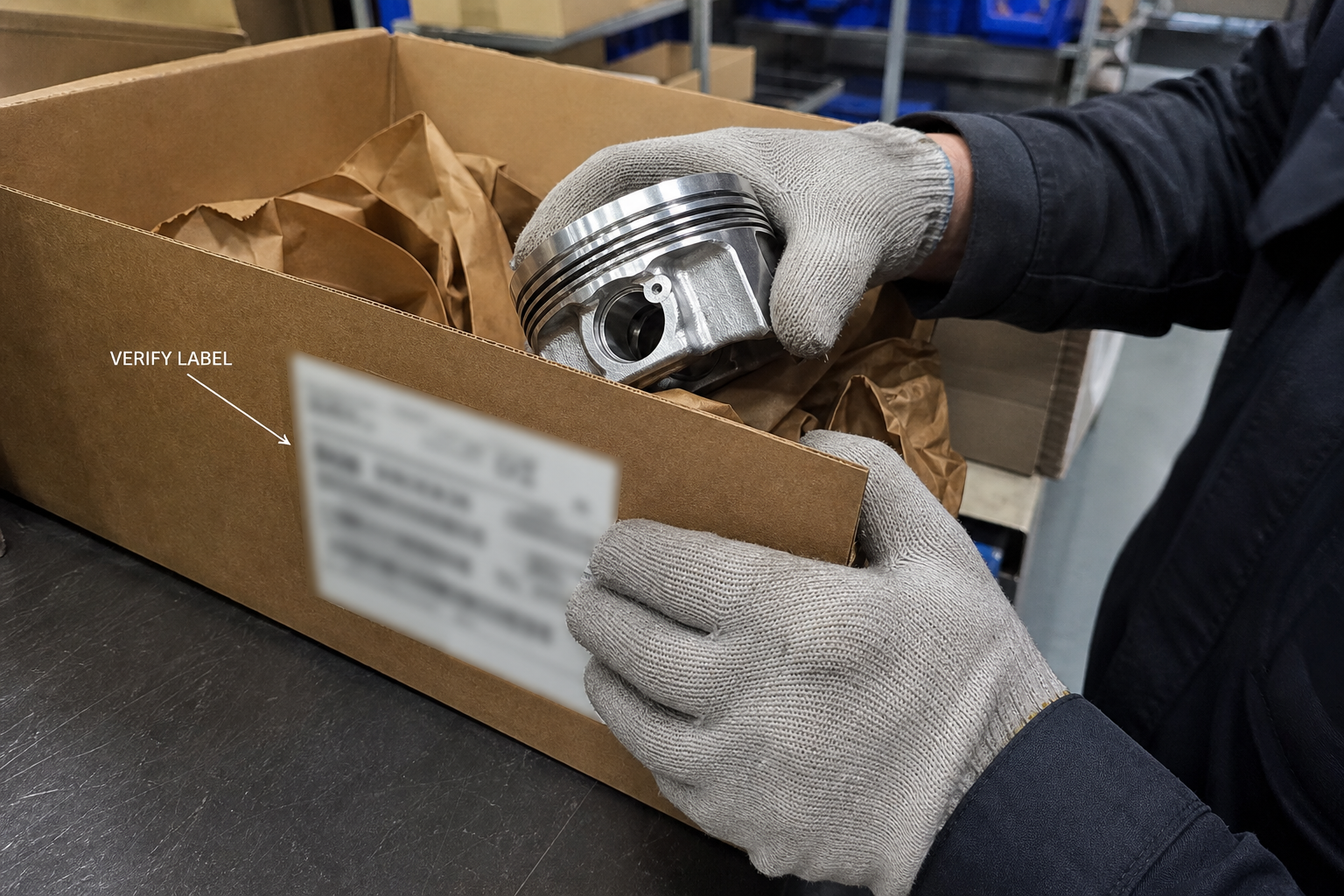
The package label is a starting point for origin verification, not the entire quality assessment.
If you’re ordering Enginetech pistons, bearings, or gaskets and expect one blanket country answer for the whole product line, you’ll be disappointed. Enginetech presents itself as a source for the engine-rebuild market with a broad product and distribution network. Origin should be verified at the component or lot level, not assumed from the brand name.
The question "where are Enginetech parts made" assumes one answer exists. It doesn’t. A set of rings might come from one country, the bearings from another, and the gaskets from a third. Understanding what the label can tell you—and what it leaves out—matters when you’re vetting parts for a customer job or warranty claim.
Key Takeaways
- Enginetech is a distributor and parts sourcer, not a vertically integrated manufacturer
- Country of origin varies by component category and changes as supplier relationships shift
- Packaging labels show country of origin for that specific part, not the entire product line
- Brand headquarters (Connecticut) does not equal manufacturing location
- Lot codes and part numbers let you trace specific components back to suppliers
- Verification requires checking individual boxes, not relying on brand-wide assumptions
Enginetech’s Business Model: Sourcing, Not Manufacturing
Enginetech (https://enginetech.com/about-us/) positions itself as a supplier of engine parts for professional rebuilders, machine shops, and installers. The company curates and distributes components—it does not own foundries, forging plants, or gasket presses.
This sourcing model is common in the automotive aftermarket. A distributor:
- Contracts with manufacturers in multiple countries
- Applies brand standards and specifications
- Warehouses and fulfills orders under one label
- Shifts suppliers as costs, quality, or capacity change
What this means for origin: the Enginetech name on a box tells you who sold and specified the part, not who machined or cast it.
When you ask "where are Enginetech parts made," you’re really asking "where do Enginetech’s current suppliers operate?" That answer changes component by component and year by year.
Global Sourcing Reality: Different Parts, Different Origins
Engine rebuild components span a wide range of manufacturing processes:
|
Component Type |
Typical Manufacturing Locations |
Why Origin Varies |
|
Cast pistons |
Verify by part label or supplier document |
Foundry, alloy, and application can vary by part number |
|
Forged pistons |
US, Germany, Japan |
Specialized forging equipment |
|
Bearings |
Verify by part label or supplier document |
Journal size, grade, and application matter more than a brand-level origin assumption |
|
Gaskets |
Verify by package and kit contents |
Material type, thickness, and passage layout matter |
|
Timing components |
Verify by package and supplier document |
Chain/belt system and included guides/tensioners differ by application |
|
Valvetrain parts |
Verify by package and part marking |
Position, material, and engine layout determine suitability |
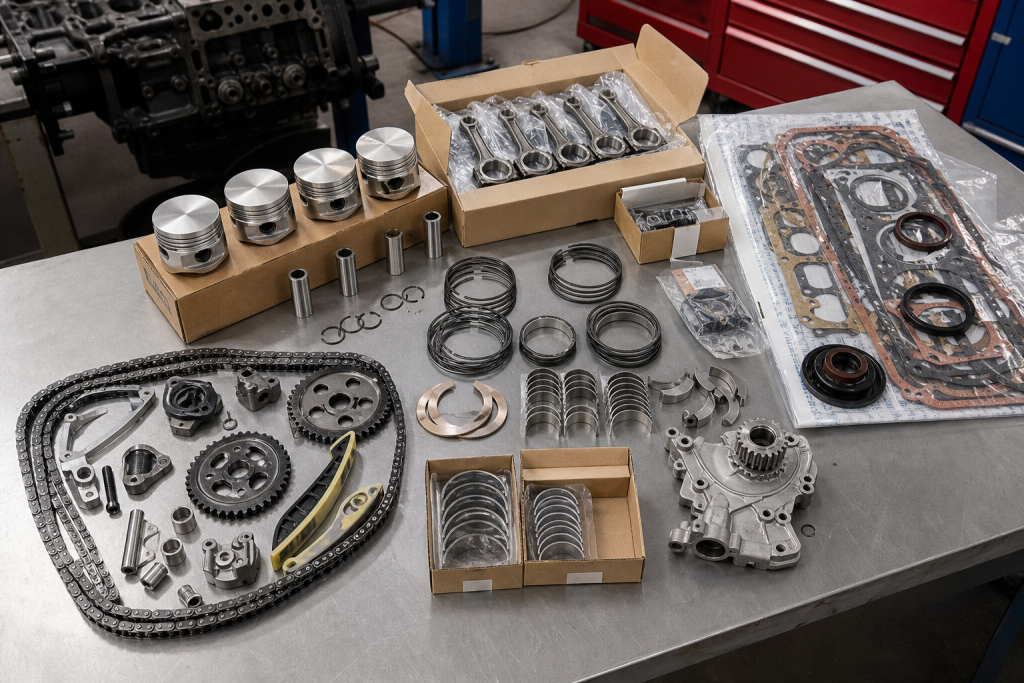
A complete engine rebuild kit (https://enginetech.com/engine-kits/) from Enginetech may contain multiple component categories, such as pistons, rings, bearings, gaskets, timing parts, oil pump parts, and expansion plugs. Do not infer the origin of one category from another; check the packaging, label, or supplier documentation for each part number.
This isn’t deceptive—it’s how global supply chains work. The distributor optimizes for cost, lead time, and quality tier based on the component’s role and the customer’s price point.
What the Packaging Label Actually Tells You
US customs law requires country-of-origin marking on imported goods. When you receive an Enginetech component, the box or bag must state where that specific part was manufactured.
What the label shows:
- Country where the part was substantially transformed or completed
- Compliance with marking regulations for that product category
- Origin of that SKU at the time of packaging
What the label does not show:
- Where raw materials were sourced
- Whether subcomponents came from other countries
- Future origin if the supplier changes
- Origin of other parts in the same product line
Example: if one Enginetech component package clearly shows a country-of-origin label, that label applies to that specific component or package. It does not automatically tell you where the bearings, gaskets, rings, or timing parts in the same order were made. Check each box separately.
Country of Origin vs Brand Headquarters
Enginetech’s corporate office is in Connecticut. This is the brand headquarters—where sales, engineering support, and distribution are managed.
Corporate location does not equal manufacturing location.
This confusion is common:
- "Enginetech is a US company" → true, but irrelevant to component origin
- "I want American-made parts, so I buy Enginetech" → incorrect inference
- "The website says Connecticut, so parts are made there" → no, that’s where the office is
If domestic manufacturing is a requirement for your shop or customer, verify origin on the specific components you order. Do not assume brand location equals part origin.
How to Verify Origin for Specific Components
When origin matters—for Buy America compliance, tariff calculation, or customer preference—follow these steps:
1. Check the box or bag label
Look for "Made in [Country]" or "Country of Origin: [Country]" printed on the packaging. This is required for imported parts and usually stamped or printed on the box end or label.
2. Record the part number and lot code
The part number (typically a 5-8 character alphanumeric code) and lot code (date code or batch number) together identify the production run. Write these down if you need to reference origin later or file a warranty claim.
3. Contact Enginetech with specific SKUs
If packaging is missing or unclear, contact Enginetech’s technical support with the part number. They can confirm the current supplier and origin for that SKU. Do not ask "where are your parts made"—ask about the specific component.
4. Compare across orders
Origin can shift between orders if Enginetech changes suppliers. A piston set ordered in January might come from a different factory than the same part number in June. If origin consistency matters, order larger quantities from one lot.
Lot Traceability and Supplier Transparency
Lot codes printed on Enginetech packaging allow tracing back to the production batch and, by extension, the manufacturing facility. This traceability matters for:
- Warranty claims (isolating defective batches)
- Recall compliance
- Quality audits
- Origin verification for regulatory purposes
Enginetech maintains supplier records that link lot codes to manufacturing facilities. If a bearing fails and the lot code indicates a quality issue, the distributor can identify whether the problem is supplier-specific or systemic.
For the installer or rebuilder, this means: keep the boxes until the job is verified. If a comeback happens, the lot code proves which batch you received and supports your warranty claim.
When Origin Actually Matters
Origin affects purchasing decisions in specific scenarios:
Regulatory compliance: Government or fleet contracts may require domestic content percentages. You must verify origin on every component.
Tariff cost: Imported parts carry duty fees. Knowing origin lets you calculate landed cost accurately.
Customer preference: Some customers request domestic or specific-country parts. You need to verify before quoting or ordering.
Quality tiers: Some buyers associate certain countries with quality levels. Whether justified or not, this affects their purchasing decision.
Warranty and support: Parts from established manufacturing regions may have better traceability and warranty support.
For routine rebuilds where compliance and tariff aren’t factors, origin is less important than fitment, specification match, and price. Don’t over-index on country when the part meets the application requirements.
FAQs
Are Enginetech parts made in the USA?
Enginetech is a U.S.-based company, but that does not mean every component is U.S.-made. Origin can vary by part number and supplier. Check the label on each part you receive or ask the distributor for documentation.
Does Enginetech manufacture its own parts?
Enginetech presents itself as a source and distribution company for engine rebuilders. For a specific part, verify whether Enginetech is the brand owner, distributor, or direct manufacturer by checking the packaging and asking for supplier documentation.
How do I know if my Enginetech parts are genuine?
Purchase from authorized distributors. Verify that packaging includes Enginetech branding, part numbers match your order, and country-of-origin labels are present. Counterfeit parts typically lack proper labeling and traceability codes.
Can I request parts from a specific country?
Ask before ordering. If domestic origin is required, ask your parts supplier to verify origin for the exact part number and lot before shipping, or choose a supplier that can document the required origin.
Why does origin change between orders?
Supplier sources can change over time in the aftermarket. If origin consistency matters for your job, verify the current lot rather than relying on a previous order.
Conclusion
The answer to "where are Enginetech parts made" is: it depends on the component, the current supplier, and the production batch. Enginetech operates as a distributor with a global supply base, not a single-factory manufacturer.
What you can verify: country of origin for each specific part you receive, printed on the packaging. What you cannot assume: that all Enginetech parts come from one country, or that brand headquarters equals manufacturing location.
For jobs where origin matters—regulatory compliance, customer requirements, tariff calculation—check the label on every box and record lot codes. For standard rebuilds, focus on fitment, specification, and price. The part’s performance in the engine matters more than where the foundry was located.