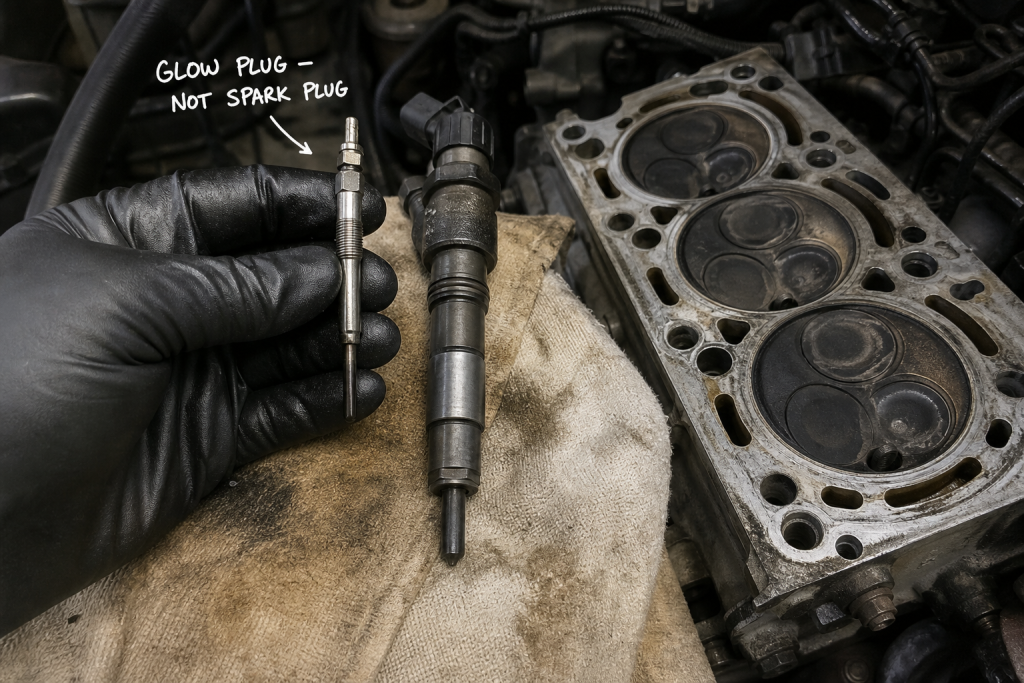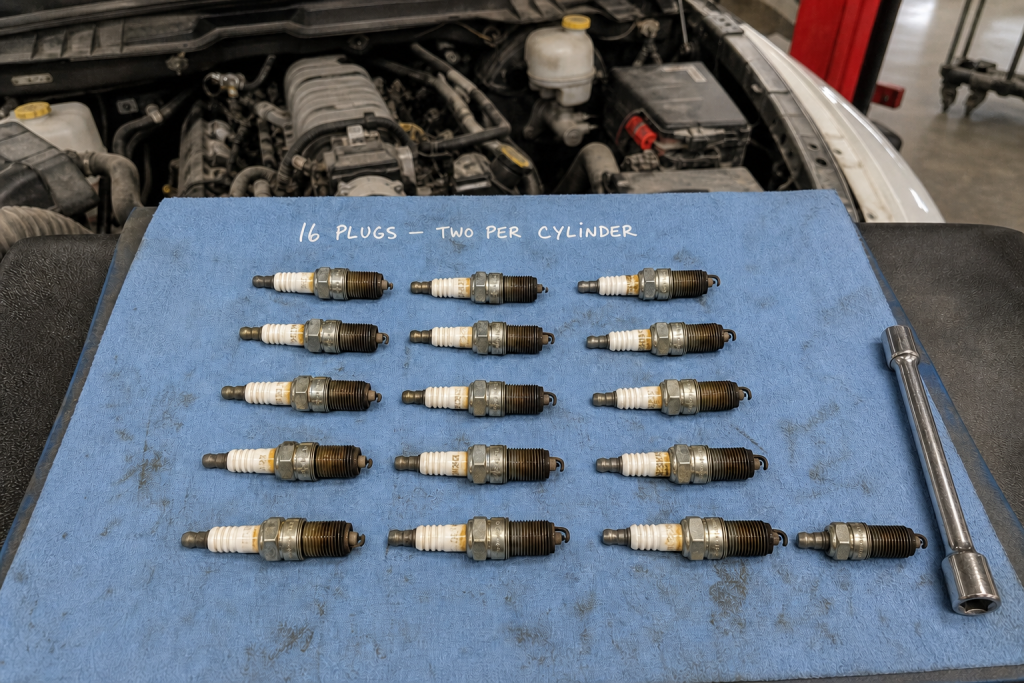
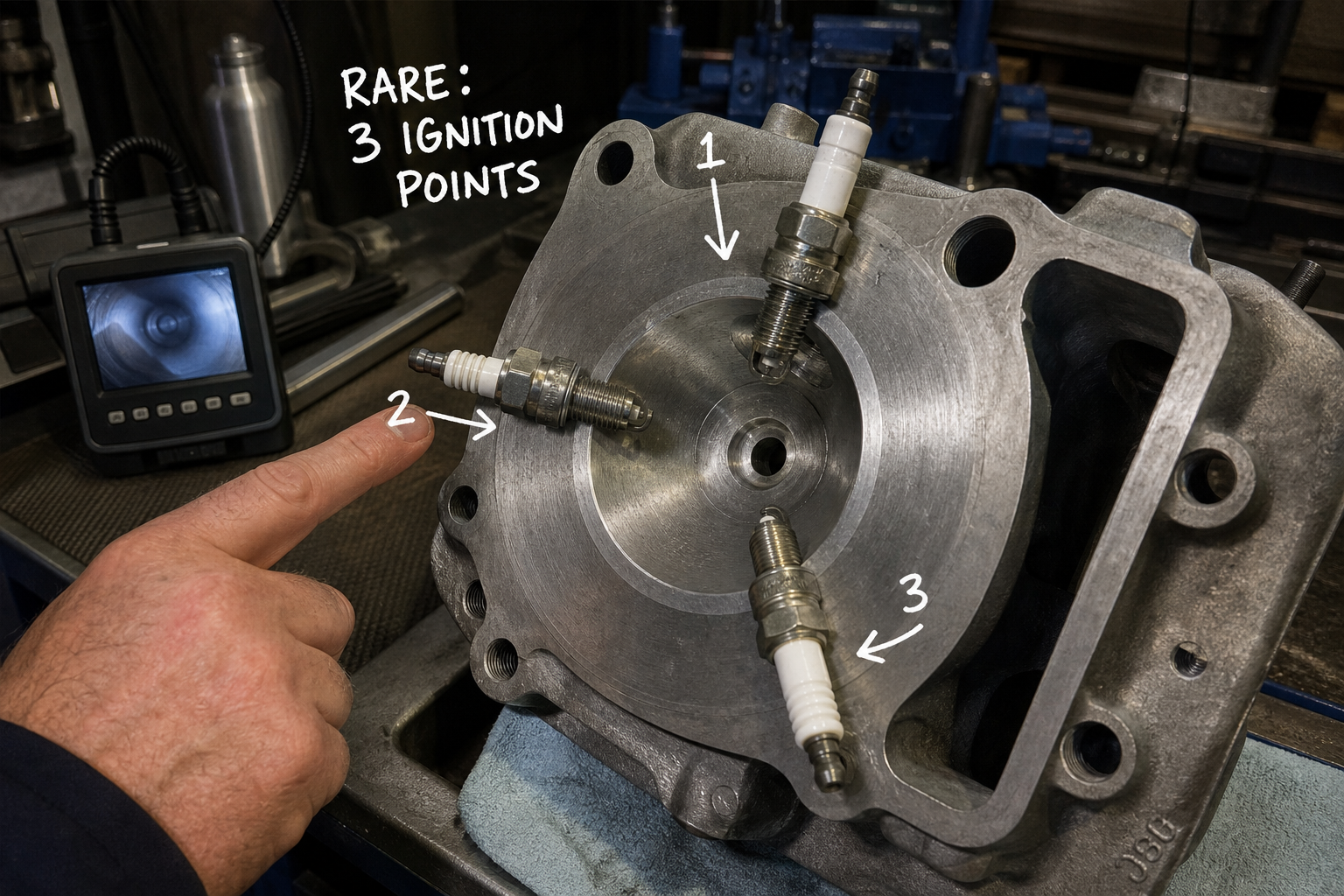
Three ignition points are rare and usually reflect specialized combustion or redundancy goals.
If you’re researching three spark plugs per cylinder, you’ve likely encountered a specialized engine—not a typical passenger vehicle. This configuration is rare. Most automotive engines use one plug per cylinder; some performance and aircraft engines use two. Three plugs per cylinder appears in select aviation engines, certain industrial applications, and experimental high-performance builds where combustion efficiency, redundancy, or emissions control justify the added complexity and cost.
The core reason: flame travel distance and ignition reliability. In large-bore cylinders or engines requiring fail-safe operation, multiple ignition points reduce the time needed to burn the air-fuel mixture and provide backup if one plug fails.
Key Takeaways
|
Aspect |
Detail |
|
**Rarity** |
Three plugs per cylinder is uncommon; aviation and industrial engines are the primary users |
|
**Primary benefit** |
Shorter flame travel distance across large-bore combustion chambers improves burn speed and efficiency |
|
**Redundancy** |
Critical in aircraft engines where single-plug failure cannot compromise operation |
|
**Emissions** |
More complete combustion reduces unburned hydrocarbons and can lower emissions in specific engine types |
|
**Cost trade-off** |
Requires triple the plugs, more complex ignition systems, and increased maintenance labor |
What Makes Three-Plug-Per-Cylinder Configurations Different
Standard Ignition Baselines
Most gasoline engines ignite the air-fuel mixture from a single point. The flame front propagates outward from that spark plug until the entire charge burns. In small-bore cylinders (80-90 mm typical in passenger cars), this single ignition point suffices.
Some engines use dual ignition (https://en.wikipedia.org/wiki/Dual_ignition) with two plugs per cylinder. This design appears in:
- **Aircraft piston engines** (Lycoming, Continental) for safety redundancy
- **Performance automotive engines** (some Mercedes-Benz, Alfa Romeo, Chrysler Hemi variants) for faster combustion in larger bores
- **Emissions-focused engines** where twin flame fronts ensure more complete burning
Three plugs extend this logic further but cross a practicality threshold that limits adoption.
Flame Travel Physics in Large Bores
Flame speed in a gasoline engine is roughly 20-40 meters per second under normal conditions. In a 100 mm bore cylinder with a single central plug, the flame must travel 50 mm to reach the cylinder wall—about 1.25-2.5 milliseconds.
In a 150 mm bore (found in some industrial and large displacement engines), that travel time increases to nearly 4 milliseconds for a single plug. At 3,000 RPM, each power stroke lasts only 10 milliseconds. Slower combustion reduces peak cylinder pressure and wastes thermal energy.
Three strategically placed plugs create overlapping flame fronts that reduce maximum travel distance. If plugs are positioned 120 degrees apart in a circular chamber, no point in the combustion space is more than one-third the bore diameter from an ignition source. This cuts burn time significantly.
Where Three-Plug Ignition Actually Appears
Aviation Piston Engines
Aircraft engines are the most documented users of triple ignition systems. Redundancy is paramount: a single plug failure at altitude cannot be tolerated.
Some radial aircraft engines and experimental aviation builds use three plugs per cylinder to achieve:
- **Fail-operational capability**: Engine continues at reduced power even with two plugs failed
- **Improved combustion in large radial cylinders**: Radial engines often have bores exceeding 130 mm
- **Reduced ignition timing advance requirements**: Faster burn allows later spark timing, which can reduce detonation risk
These engines use independent magneto systems or electronic ignition modules that fire each plug set separately, ensuring true redundancy rather than just parallel firing.
Large-Bore Industrial and Marine Engines
Stationary engines, some marine applications, and industrial power units with cylinder bores above 150 mm may use three plugs when:
- **Fuel quality is variable**: Multiple ignition points increase combustion reliability with lower-octane or inconsistent fuel
- **Emissions regulations apply**: More complete combustion reduces hydrocarbon and CO emissions in stationary applications subject to air quality rules
- **Lean-burn operation is required**: Lean mixtures burn slower; multiple ignition points compensate
These applications value operational uptime and emissions compliance over initial cost.
High-Performance and Racing Exceptions
Some experimental racing engines and drag racing builds have tested three-plug configurations, particularly in:
- Large-displacement naturally aspirated engines (over 500 cubic inches)
- Nitrous oxide or forced induction setups where mixture density and burn speed are critical
- Engines running aggressive ignition timing where multiple flame fronts reduce the likelihood of end-gas detonation
These are custom builds, not production engines. The added complexity is justified only when maximum power output per cycle is the priority.
Technical Benefits Breakdown
Combustion Efficiency and Pressure Rise Rate
Faster combustion concentrates heat release closer to top dead center (TDC). This increases peak cylinder pressure and improves thermal efficiency.
Single vs. multiple ignition points:
|
Configuration |
Estimated burn duration (150 mm bore, 3000 RPM) |
Peak pressure timing |
|
Single plug (center) |
6-8 crank angle degrees |
10-15° ATDC |
|
Dual plugs (opposite sides) |
4-5 crank angle degrees |
8-12° ATDC |
|
Three plugs (120° spacing) |
3-4 crank angle degrees |
5-10° ATDC |
The closer peak pressure occurs to TDC without occurring before (which would cause knocking), the more work is extracted per cycle.
Ignition Redundancy in Critical Applications
In aircraft and some industrial contexts, spark plug (https://en.wikipedia.org/wiki/Spark_plug) failure must not stop the engine. Three independent plugs per cylinder mean:
- One plug failure: minimal performance loss
- Two plug failures: engine continues at reduced output
- Three plug failures (extremely rare with proper maintenance): loss of that cylinder only
This is different from automotive dual ignition, where both plugs often share a single coil or distributor circuit. True triple redundancy requires three separate ignition circuits.
Emissions Reduction Mechanism
Incomplete combustion leaves unburned hydrocarbons (HC) in exhaust. Multiple ignition points reduce the likelihood of flame quenching at the cylinder walls and ensure more thorough burning of mixture trapped in crevice volumes and near the combustion chamber periphery.
In stationary engines subject to EPA or regional air quality standards, this can be the difference between compliance and requiring exhaust aftertreatment.
Why Three Plugs Per Cylinder Remains Rare
Cost and Complexity
- **Parts count**: Three times the plugs, three times the ignition coils or magneto outputs, three times the plug wires or coil-on-plug connectors
- **Cylinder head design**: Requires three threaded bosses per cylinder with clearance for plug bodies and access for installation
- **Maintenance labor**: Each service interval means three plugs per cylinder to inspect, gap, or replace
In a six-cylinder engine, that’s 18 spark plugs instead of six. For passenger vehicles, the marginal benefit does not justify this cost.
Diminishing Returns
The jump from one plug to two provides significant benefit in larger bores. The jump from two to three provides smaller additional gains. Most engineers find that dual ignition captures the majority of available combustion speed improvement.
Physical Packaging Limits
Modern automotive engines have crowded cylinder heads with direct injectors, variable valve timing actuators, camshafts, coolant passages, and exhaust ports. Finding space for three spark plugs per cylinder without compromising structural integrity or thermal management is difficult.
FAQs
Do any modern cars use three spark plugs per cylinder?
No production passenger cars currently use three plugs per cylinder. Some high-performance cars (certain Mercedes-Benz AMG models, older Alfa Romeo V6 engines) used dual plugs. Three-plug systems remain in aviation and specialized industrial applications.
Can I add a third spark plug to my engine for more power?
Not without extensive cylinder head modification. The head must be machined for threaded plug bosses, ignition system must be adapted to fire three plugs, and combustion chamber shape must be designed for multiple flame fronts. This is not a bolt-on modification.
How do you maintain a three-plug-per-cylinder engine?
Service intervals follow the same logic as single-plug engines, but workload triples. Inspect all three plugs per cylinder for electrode wear, carbon deposits, and correct gap. Replace all plugs in a set to maintain even ignition performance. Stagger replacement across plug positions if budget requires (replace position 1 across all cylinders, then position 2, etc.) only in non-critical applications.
What happens if one plug fails in a three-plug system?
In properly designed systems with independent ignition circuits, the engine continues running with reduced efficiency in that cylinder. Combustion becomes slower and less complete, but the other two plugs maintain ignition. In aircraft engines, this is monitored and logged; the pilot continues flight and schedules maintenance.
Are three plugs better for forced induction engines?
In very large turbocharged or supercharged engines (industrial, marine), three plugs can help manage the faster burn rate and higher cylinder pressures of boosted operation. In typical automotive turbo engines (2.0-4.0 liters), dual plugs or advanced single ignition systems provide sufficient performance without the complexity of triple ignition.
When Three-Plug Ignition Makes Engineering Sense
This configuration is justified when:
- **Bore diameter exceeds 140-150 mm** and combustion speed becomes a limiting factor for thermal efficiency
- **Redundancy is a safety requirement**, as in certified aircraft piston engines
- **Emissions regulations require maximum combustion completeness** in stationary or marine engines where exhaust aftertreatment is impractical
- **Operational uptime value exceeds installation and maintenance cost**, common in industrial power generation
For engine rebuilders and parts suppliers, three-plug systems mean specialized inventory requirements. Cylinder heads cannot be sourced from standard automotive suppliers; plugs must meet aviation or industrial specifications (often different heat ranges and reach dimensions than automotive plugs); and ignition components require vendor relationships with aircraft or industrial engine OEMs.
Practical Implications for Engine Builders and Operators
If you’re working with a three-plug-per-cylinder engine:
- **Order plugs in complete sets**: Do not mix plug brands or heat ranges within a cylinder
- **Verify ignition circuit independence**: Confirm each plug has a separate coil or magneto output for true redundancy
- **Check cylinder head thread condition**: Three plugs per cylinder means more opportunities for thread damage during service; use anti-seize and correct torque specs
- **Plan for longer service time**: Budget 2-3x the labor compared to single-plug engines of similar displacement
In aircraft applications, follow manufacturer-specified inspection intervals and plug rotation schedules. In industrial engines, monitor exhaust emissions to verify all plugs are firing; a failed plug will show up as increased HC or CO in exhaust analysis.
Conclusion
Three spark plugs per cylinder is a specialized solution to specific engineering challenges: large combustion chambers where flame travel limits efficiency, applications where ignition failure is unacceptable, and emissions-sensitive engines requiring maximum burn completeness. It is not a common automotive feature and does not represent the next evolution of ignition systems for passenger vehicles.
If you encounter this configuration, you’re working with an aircraft engine, large industrial engine, or highly specialized performance build. Understand the redundancy and combustion logic behind the design, maintain all three plugs per cylinder as a complete set, and recognize that the added complexity serves a measurable purpose in these specific contexts.
For the vast majority of gasoline engines—automotive, small equipment, and standard industrial power—single or dual ignition remains the practical optimum between performance, cost, and maintainability.